
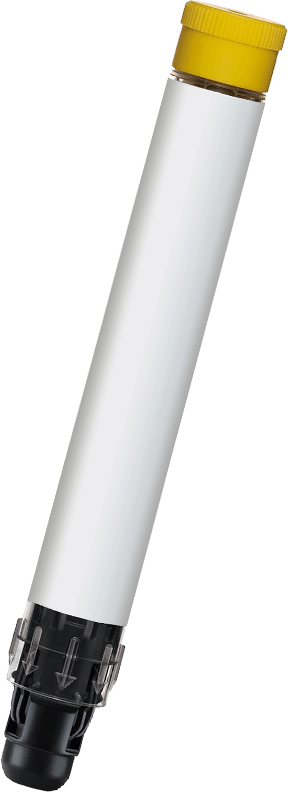
Jext
You will answer clinical questions before treatment is considered. Submitting a consultation does not guarantee supply.
Jext is a branded adrenaline auto-injector used for the emergency treatment of severe allergic reactions, including anaphylaxis. It contains adrenaline and is designed to deliver a measured dose into the outer thigh muscle when emergency treatment is needed.
Anaphylaxis can develop quickly and may be triggered by foods, medicines, insect stings, latex or other allergens. Symptoms can include swelling of the lips, mouth, tongue or throat, difficulty breathing, wheezing, dizziness, fainting, confusion, rash, flushing, stomach cramps, vomiting or collapse.
How to use
Use Jext exactly as shown in the patient information leaflet and device instructions. You should make sure you and people close to you know how to use it before an emergency happens.
Jext should only be injected into the outer thigh. It can be used through clothing if needed. Do not inject it into the buttock, hands, fingers, feet or any other area.
After using Jext, call 999 immediately and say “anaphylaxis”. Lie down with your legs raised if possible. If breathing is difficult, you may sit up slowly, but do not stand or walk around, even if you feel better.
If symptoms do not improve after 5 minutes, or symptoms return, a second adrenaline auto-injector may be needed if available. Patients at risk of anaphylaxis are usually advised to carry two adrenaline auto-injectors at all times.
Jext is for single use only and cannot be reused. After use, the device should be handed to the ambulance crew or healthcare professional so they know what has been given.
Check the expiry date regularly and replace your Jext before it expires. Store it as directed in the patient leaflet. Do not expose it to extreme heat or cold, and do not freeze it.
Main Ingredients
EpiPen contains adrenaline as the active ingredient.
Jext contains adrenaline as the active ingredient.
Jext 150 micrograms contains 150 micrograms of adrenaline per dose.
Jext 300 micrograms contains 300 micrograms of adrenaline per dose.
Jext contains sodium metabisulphite, which may rarely cause allergic-type reactions or breathing problems in sensitive people. However, adrenaline is essential for treating anaphylaxis, and a prescribed adrenaline auto-injector should be used in an allergic emergency when anaphylaxis is suspected.
Side Effects & Cautions
Some people may experience side effects after using Jext. Possible side effects can include fast heartbeat, palpitations, sweating, nausea, vomiting, headache, dizziness, weakness, shaking, anxiety, nervousness, paleness, breathing difficulty or feeling restless.
These effects may be more likely in people with certain medical conditions, but adrenaline should still be used in an anaphylactic emergency if prescribed and available.
Seek urgent medical help after every use of Jext, even if symptoms improve. Anaphylaxis can return after initial improvement and hospital observation may be needed.
Take extra care and make sure your prescriber knows if you have heart disease, high blood pressure, diabetes, an overactive thyroid, glaucoma, severe kidney problems, Parkinson’s disease, prostate problems, high calcium levels, low potassium levels, asthma, or if you are elderly or pregnant.
Asthma can increase the risk of severe allergic reactions. If you have asthma and are at risk of anaphylaxis, it is important that your asthma is well controlled and that you understand when to use your adrenaline auto-injector.
Tell your clinician about all medicines you take, including prescription medicines, over-the-counter medicines, supplements and herbal products. Some medicines may affect how adrenaline works or increase the risk of side effects. This can include some antidepressants, heart medicines, thyroid medicines, diabetes medicines and medicines used for Parkinson’s disease.
Accidental injection into the hands or fingers can reduce blood flow to the affected area and needs urgent medical assessment. If Jext is accidentally injected anywhere other than the outer thigh, go to the nearest emergency department immediately.
Jext is not suitable as a general allergy medicine for mild symptoms. It is intended for emergency treatment of severe allergic reactions and should be used when anaphylaxis is suspected. Antihistamines and inhalers are not a substitute for adrenaline in anaphylaxis.
Read the official patient information leaflet before using any medicine. The leaflet provides important information on use, cautions, side effects and storage.
Open leaflet on eMC