
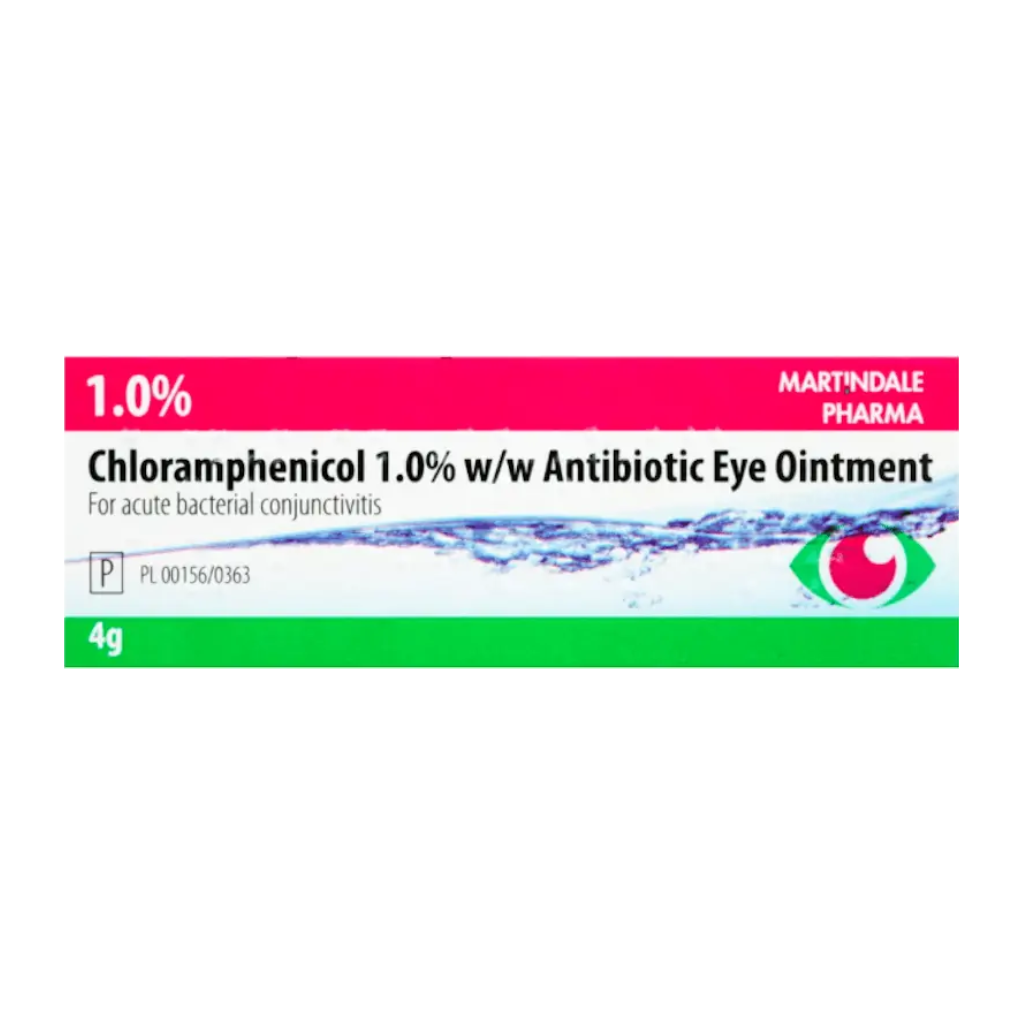
Chloramphenicol 1% Eye Ointment
You will answer clinical questions before treatment is considered. Submitting a consultation does not guarantee supply.
Chloramphenicol 1% Eye Ointment is an eye treatment used for bacterial conjunctivitis where clinically appropriate. It contains Chloramphenicol 1%.
Current UK product information recommends applying about 1 cm of ointment to the affected eye three to four times daily when used alone. If Chloramphenicol drops are used during the day, the ointment can instead be applied at bedtime. The course is 5 days.
Suitability depends on your symptoms, medical history, current medicines, allergies, previous treatment and pregnancy or breastfeeding considerations where relevant.
How to use
Use Chloramphenicol 1% Eye Ointment exactly as directed by your pharmacist, prescriber or the patient information leaflet supplied with the product.
The treatment schedule for bacterial conjunctivitis is: Apply about 1 cm 3 to 4 times daily. Do not change the dose, frequency or duration unless advised by a clinician.
Wash your hands and apply the prescribed length of ointment inside the lower eyelid without touching the tube tip to the eye. Temporary blurred vision can occur after application.
Ointment can temporarily blur vision. Do not wear contact lenses during treatment. Persistent symptoms after 48 hours or failure to resolve after the 5-day course requires reassessment.
If symptoms of bacterial conjunctivitis worsen, do not respond as expected or you develop a serious reaction, stop and seek appropriate clinical advice.
Main Ingredients
Chloramphenicol 1% Eye Ointment contains Chloramphenicol 1% as the main active ingredient or treatment component.
The exact formulation, excipients, device components or inactive ingredients can vary by manufacturer and pack supplied.
Always check the patient information leaflet or product instructions supplied with your specific pack, particularly if you have known allergies or intolerances.
Side Effects & Cautions
Temporary stinging, irritation or blurred vision can occur. Rare serious blood disorders have been reported; do not use if the product is contraindicated by a relevant personal or family blood-disorder history.
Ointment can temporarily blur vision. Do not wear contact lenses during treatment. Persistent symptoms after 48 hours or failure to resolve after the 5-day course requires reassessment.
Eye pain, photophobia, reduced vision, a very red eye, recent eye injury or surgery, or a painful red eye in a contact-lens wearer requires urgent eye assessment.
Stop treatment and seek urgent medical help for difficulty breathing, swelling of the face, lips or tongue, collapse or another severe allergic reaction.
Use only as directed on the pack or by the pharmacist, and seek clinical review if symptoms are severe, recurrent, atypical or not improving as expected.
Read the official patient information leaflet before using any medicine. The leaflet provides important information on use, cautions, side effects and storage.
Open leaflet on eMC